Buying a solar home in Ipoh: what the panels change, and what to ask
Updated 2026-11-08
A solar home makes its own electricity on the roof by day and draws from the TNB grid at night. Since 1 January 2026 the scheme for sending surplus power back to the grid is Solar ATAP, which replaced net metering (NEM) after it closed in June 2025. What you save depends on three things you can check before you buy: the system’s size in kWp, how much power your household uses in daylight, and who handles the Solar ATAP application.
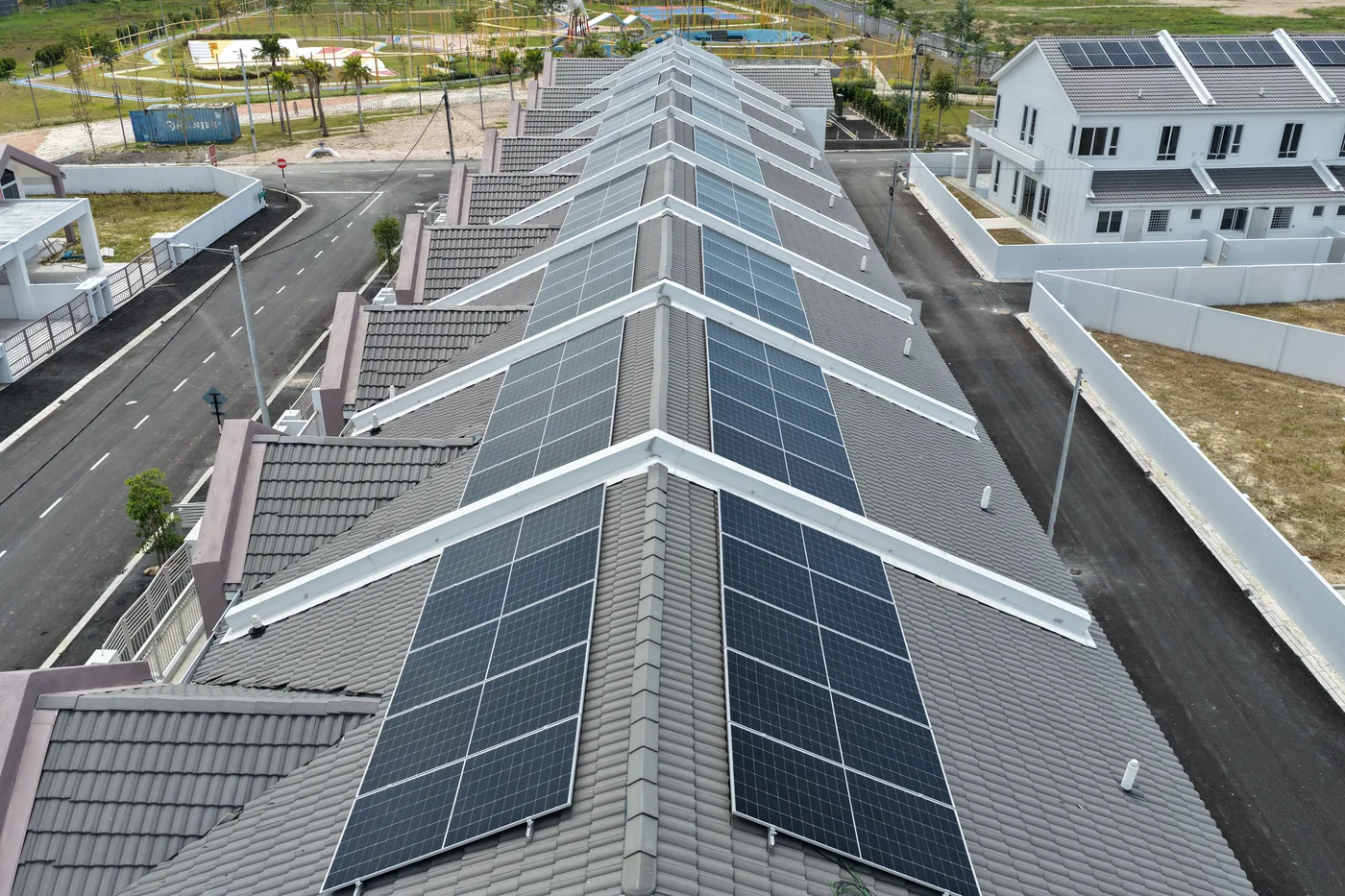
Fitted, optional or solar-ready
A “solar home”, or rumah solar, can mean three different things at an Ipoh launch. A fitted system sits on the roof before handover and inside the purchase price. An optional system is an upgrade you pay for on top. A solar-ready house has some wiring or roof provision and no panels at all.
Ask the sales team which one they mean, then get it written into the sale and purchase agreement. A brochure line binds nobody.
How the money works in 2026: Solar ATAP
Solar ATAP (the Solar Accelerated Transition Action Programme) took over from net metering on 1 January 2026. SEDA, the Sustainable Energy Development Authority, runs it, and you need to be a registered TNB customer to apply.
Your panels power the house first. Surplus electricity goes to the grid and comes back to you as an offset on your bill. The arrangement lasts 10 years from the start of your contract; after that the system keeps working, for your own use only. SEDA allocates capacity first come, first served, between opening and closing dates the government sets, and domestic systems fall in a 5kW to 15kW range.
These rules change. Read the current terms on SEDA’s own site before you count on any export credit.
Why daytime use decides your saving
Panels produce most of their output around midday. Power you use at that moment costs you nothing. Power you export earns an offset, and power you use after dark comes from TNB at the normal rate.
A household that runs air-conditioning, the washing machine or an EV charger during the day gets more from the same panels than one that empties out at 8am. Two owners with identical systems can show you very different bills for that reason alone.
The house matters as much as the panels
A cooler house needs less power in the first place. High ceilings let hot air rise away from living level. A roof array shades the slab under it, so the concrete soaks up less afternoon sun. Cross-ventilation moves heat out before you reach for the remote.
Wiring matters too. Three-phase supply carries an EV charger and heavier loads without a rewire. Ask your installer how your supply type affects the system size you can register.
Seven questions to ask about any solar house
- Size. How many kWp, and how many panels?
- Warranties. Who made the panels and the inverter, and how many years does each warranty run?
- Ownership. Do you own the system outright, or does a leasing or subscription company own it?
- Registration. Who applies for Solar ATAP, and when? If the developer has applied, can the contract pass to you?
- Roof. Did the installers drill through the roof, and does the roof warranty still stand?
- Monitoring. Can you see daily output on an app or meter, so you notice a fault?
- Cleaning. Who cleans the panels, how often, and at what cost?
Testing an “up to 80%” claim
Developers quote saving percentages. Klemeru’s developer says households can cut up to 80% of their monthly electricity cost. Treat any such figure as the seller’s number.
The test costs nothing: ask to see an existing owner’s TNB bills for a few months, with the household size alongside. One real bill tells you more than a brochure percentage.
Klemeru’s solar specification
Every Klemeru house comes with solar PV fitted before handover, an EV charger isolator, three-phase wiring and ceilings up to 20 ft, inside a guarded township with a 4.5-acre park. The developer is pursuing GreenRE certification; pursuit is not an award, so ask for the current status in writing.
This site has no published kWp figure for each house type. Ask for the system size of the exact unit you are considering, and run the seven questions above on it.
Klemeru facilities and specification · Klemeru 4, the current phase
Common questions
Does a solar house save money in Malaysia?
Usually, if your household uses a good share of its power in daylight. The saving depends on the system size, your daytime use and the Solar ATAP export terms. Ask an existing owner for real bills.
What replaced NEM 3.0?
Solar ATAP, from 1 January 2026. Net metering closed in June 2025. SEDA runs the new scheme for registered TNB customers.
Can I sell solar electricity back to TNB?
Under Solar ATAP, surplus power you export comes back as an offset on your bill for the 10-year contract period. After that the system serves your own use only.
What should I check before buying a solar house?
System size in kWp, panel and inverter warranties, whether you own the system outright, who handles the Solar ATAP application, the roof warranty, monitoring and cleaning.
Do Klemeru houses come with solar panels?
Yes. Every Klemeru house has solar PV fitted before handover, with an EV charger isolator and three-phase wiring. Ask for the kWp size of your specific unit.
More guides
Questions on your own shortlist?
Send me the two or three projects you are comparing. I will give you the honest read on each, including when the answer is that you should buy the other one.
Show house open 10:00am – 6:00pm daily. Bring your IC if you want a loan pre-check on the spot.